Welcome to WordPress. This is your first post. Edit or delete it, then start writing!
Author: admin
-
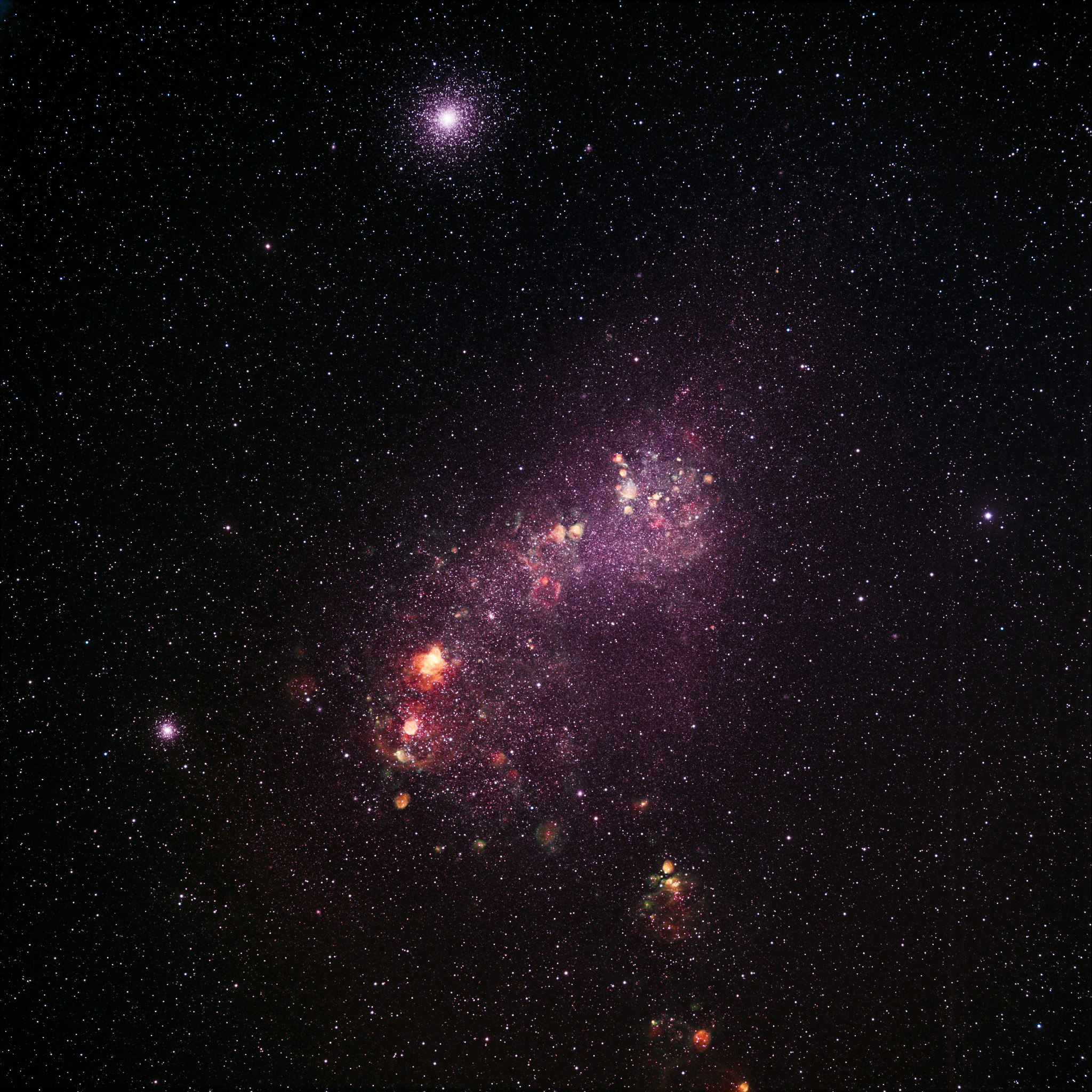
The Small Magellanic Cloud
The Small Magellanic Cloud (SMC) is unknown to many people because it can’t be seen from most of the Northern Hemisphere; it’s only visible from near the equator or the Southern Hemisphere. But from any dark sky site in the south it’s easily seen with with the naked eye as a large faint fuzzy object in the southern sky. I have seen it several times, usually whenever I am traveling in the southern latitudes. I last saw it during an ocean voyage last year as part of the Darwin 200 Expedition . I was able to see it every clear night during midnight watches and pointed it out to the other passengers and crew. But I have never photographed it — until now!
To do this I remotely operated a telescope located in Australia (!) to capture the image:
Small Magellanic Cloud (click for larger image) In this high-resolution color image you can see a lot of detail that you cannot see with your eye.
How This Image Was Created
These types of deep sky astro images are not taken with a regular camera but with a highly specialized astro camera directly attached to a powerful telescope. In this case the telescope is located in SE Australia in a remote observatory and is set up to be fully remotely operated from anywhere in the world.
Here are all the technical details for astro buffs:
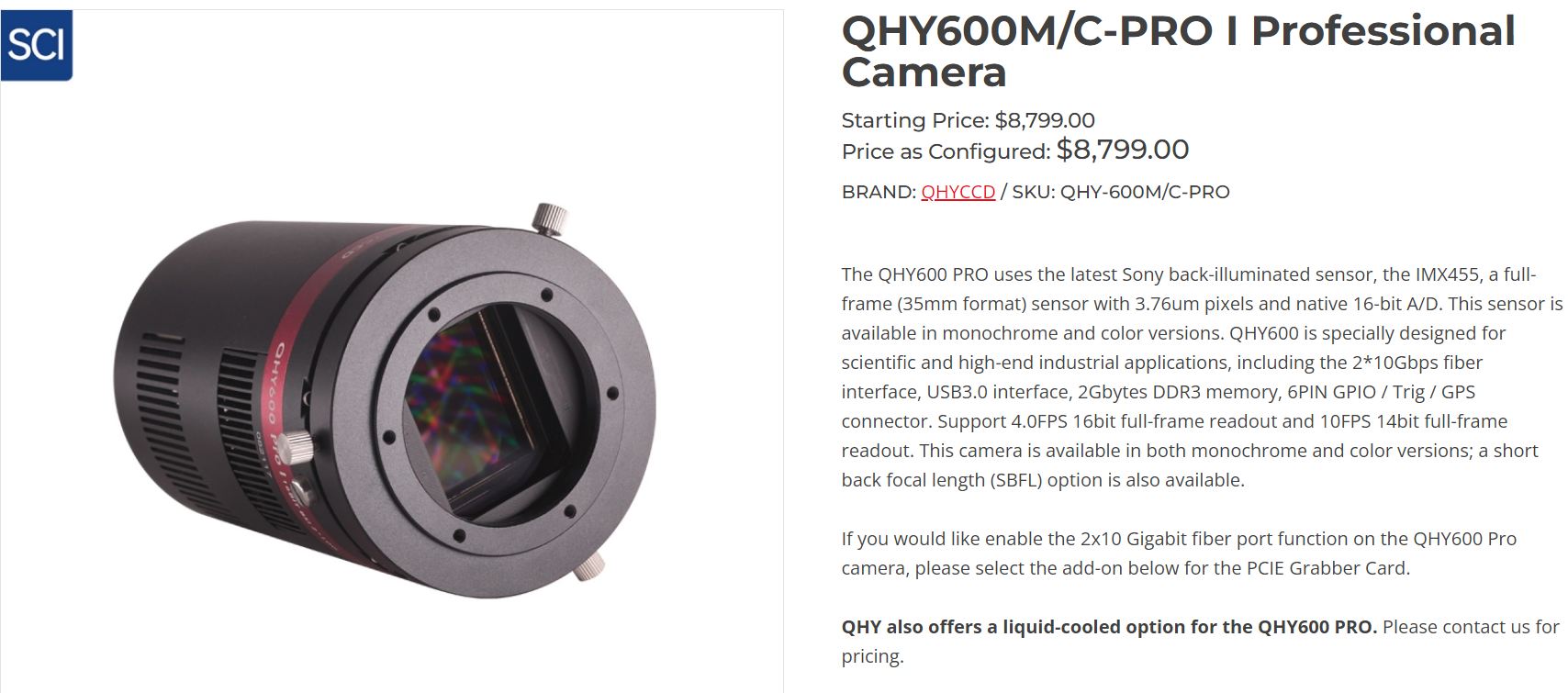
Telescope: Takahashi FSQ-106ED 106mm F3.6 APO refractor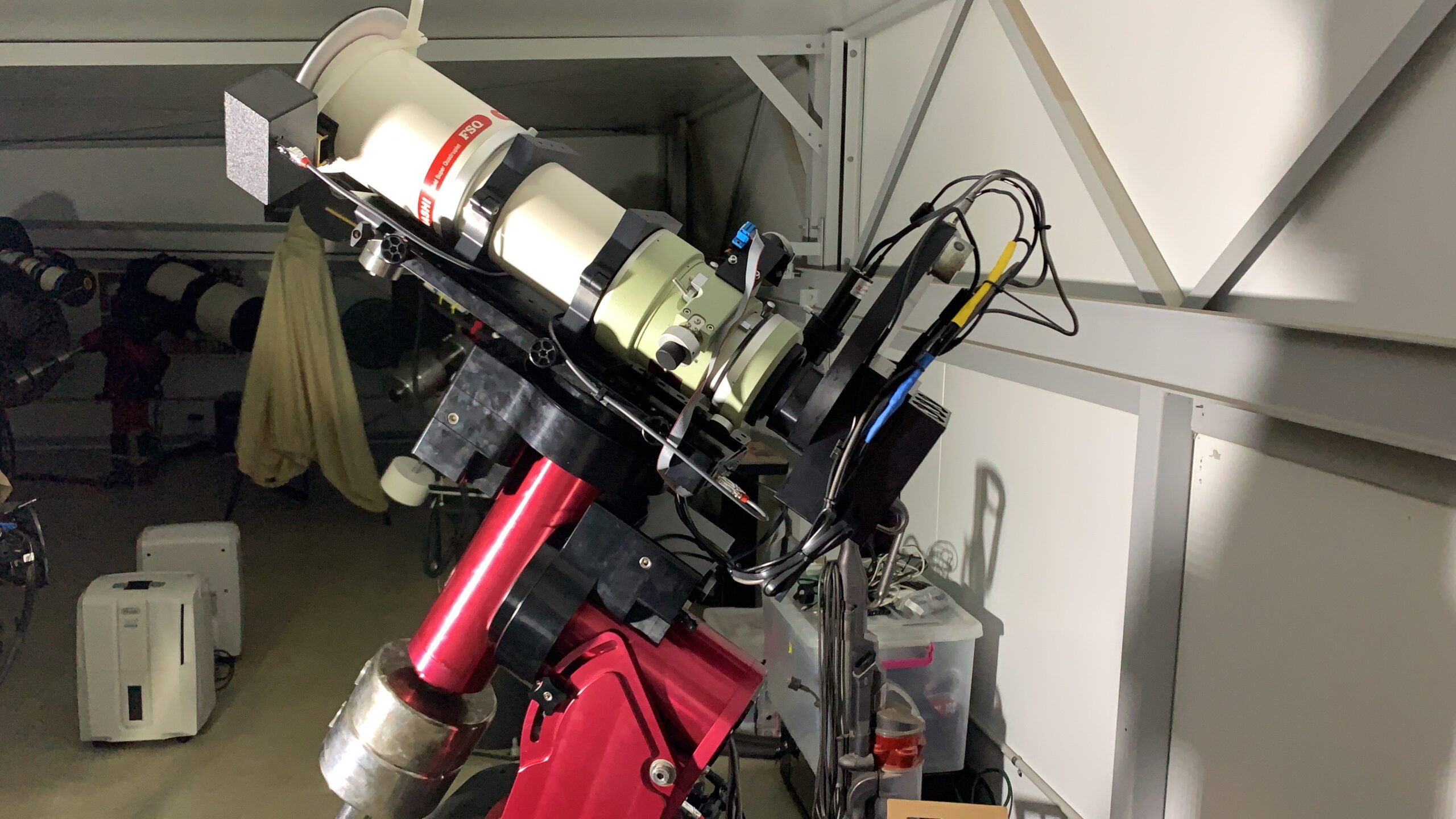 Camera: QHY-600M
The photographic technique used is called Narrowband Imaging with the Hydrogen Alpha, Sulfur II, and Oxygen III bands. But this results in the bands not being a full primary color set. So it’s not possible to construct a full true color image with these bands as you could with primary color bands like Red, Blue, Green (RBG). So the image is false color with an arbitrary mapping chosen for clarity and aesthetic considerations.
The mapping used in the above image is: Halpha -> Green, SII -> Blue, OIII -> Red
The main advantage of using Narrowband Imaging is that it blocks out all wavelengths of light except the astronomically important ones. This means it is much less impacted by light pollution from urban areas and results in greater detail. Another advantage for imaging is that background stars are sharper and less washed out than with normal full band imaging. The Hubble Space Telescope also uses Narrowband Imaging with a slightly different color palette.
A total of 300 separate frames (100 frames for each channel) were combined to create the final image. The total exposure time was over 50 hours
Small Magellanic Cloud Facts
It has “Cloud” in the name but it’s actually a galaxy. SMC is a dwarf irregular galaxy located about 200,000 light-years from Earth, visible in the southern celestial hemisphere. It’s a satellite galaxy of the Milky Way, gravitationally bound to it, and spans roughly 7,000 light-years in diameter. The SMC contains approximately 3 billion stars, significantly fewer than the Milky Way’s 200-400 billion, and is rich in gas and dust, fostering active star formation. It’s part of the Local Group of Galaxies, which includes the Milky Way, the Large Magellanic Cloud (LMC), and the Andromeda Galaxy.
-
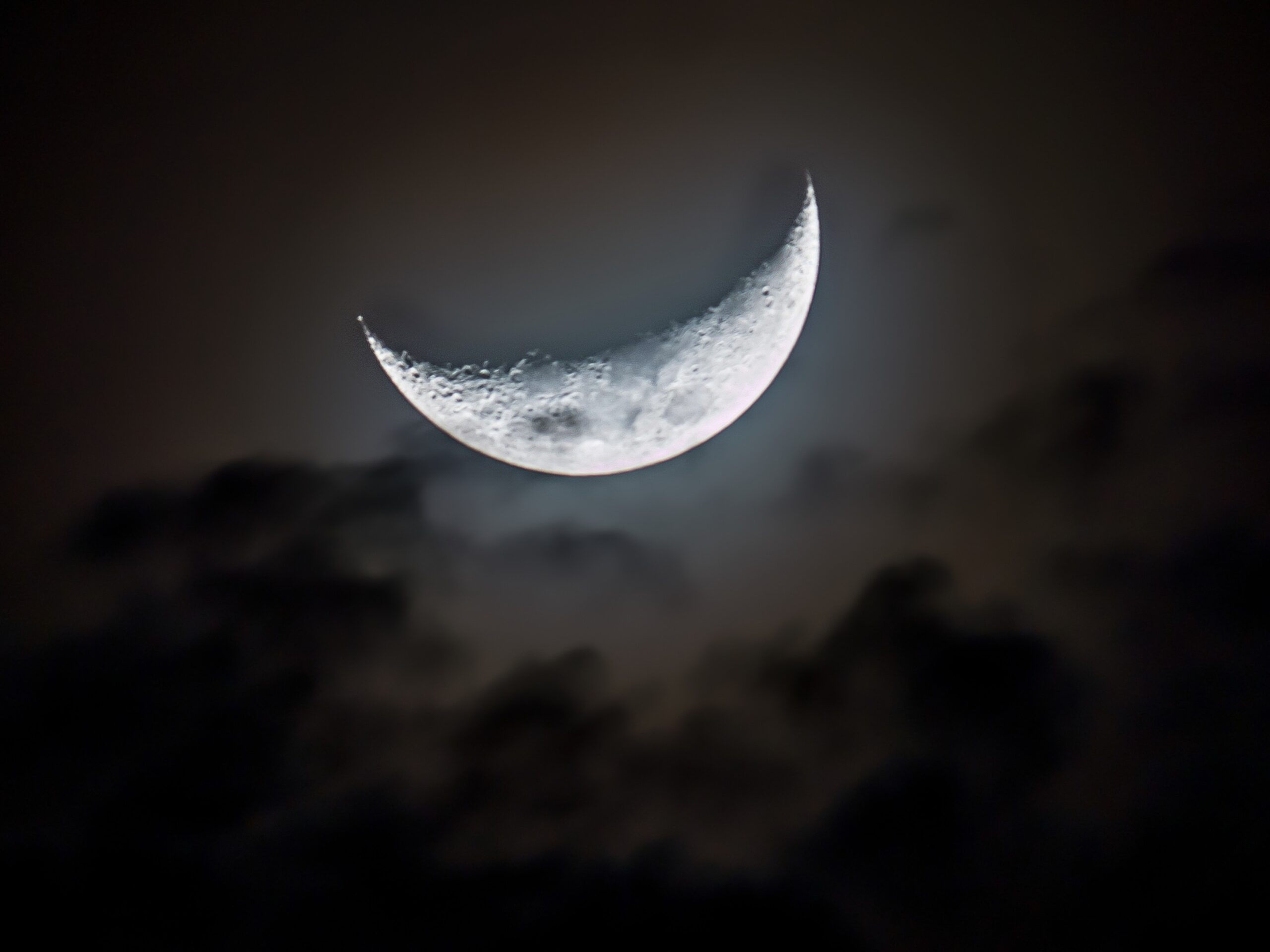
Eerie Moon With New Scope
Eerie moon Doesn’t it look kinda spooky?
[Nikon D750 1/2 sec. ISO 100 with Borg 90FL at f/5 prime focus]
-
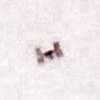
ISS Captured At Last!

I thought it would be cool to photograph the International Space Station. I believe the best way to do this is to catch it just as it’s transiting the Sun. This way the ISS would be sharply backlit and silhouetted. The trouble is this doesn’t happen every day. You have to go to a specific place at a specific time, and the weather has to cooperate. I’ve been waiting for such an opportunity for over a year! It’s also very challenging because its orbital speed is so fast (17,000 mph) that it crosses the Sun in a fraction of second.
Well today the stars aligned, so to speak, and I got the opportunity. I used a Micro 4/3 camera with my new Borg 90FL, and I actually captured it!
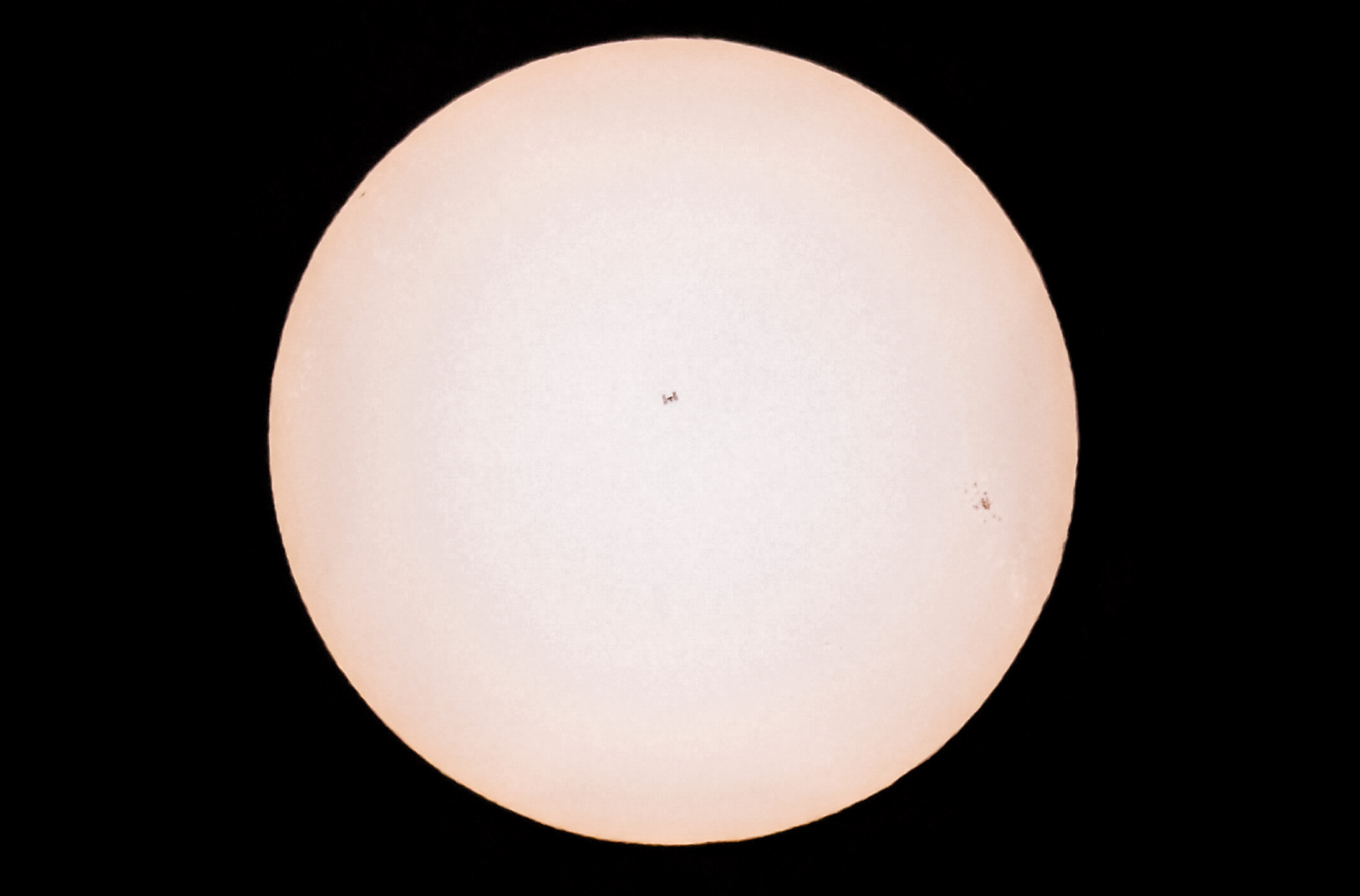
ISS transit of the Sun [Taken with Panasonic DMC-GH4 w/Borg 90FL APO] It was so tiny in the viewfinder that I could not see it at all with my eye. I just had to go on faith that my calculations were right and hope it would show up at the predicted time. I only found out that I captured it after I returned home and uploaded it to my computer!
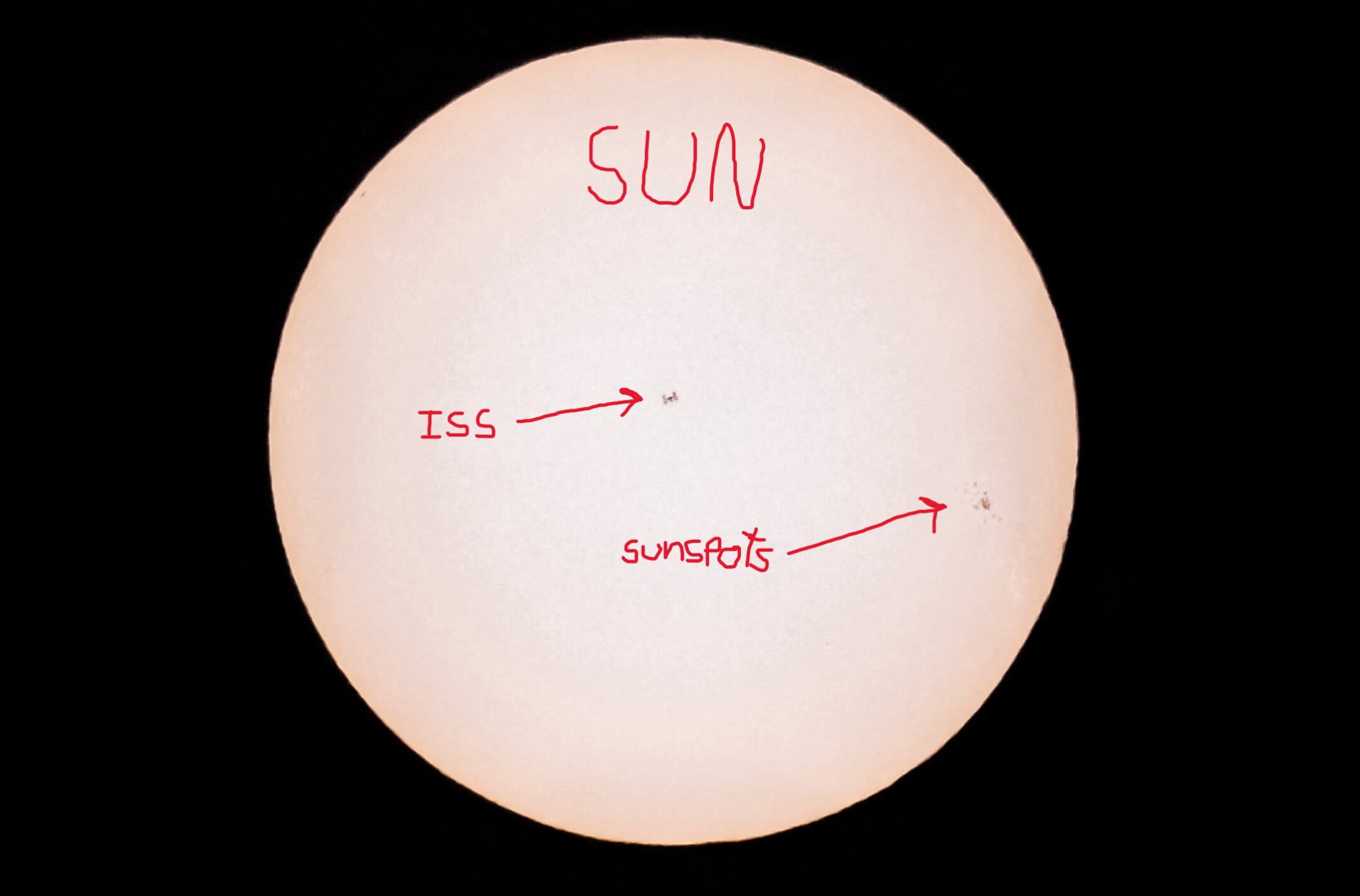
If you look at the sunspot grouping in the lower right and compare it to yesterday’s picture, you’ll notice it has moved. That’s how much the Sun rotated in one day.
[ISS enlarged] Below is a video of the entire transit event. As you can see it’s quite fast!

The shaking is due to the wind blowing pretty hard so that even with a stable tripod there was considerable movement.
[Update Feb 16, 2016]
A video editing professional graciously offered to stabilize and enhance my video:

<!– p class="has-text-align-center">[Edited by Doug Stringham at mediagrabbers.com]
–>
-
On any Sun day
A sunspot group below and right of center. This sunspot group has been given a name, AR2497.
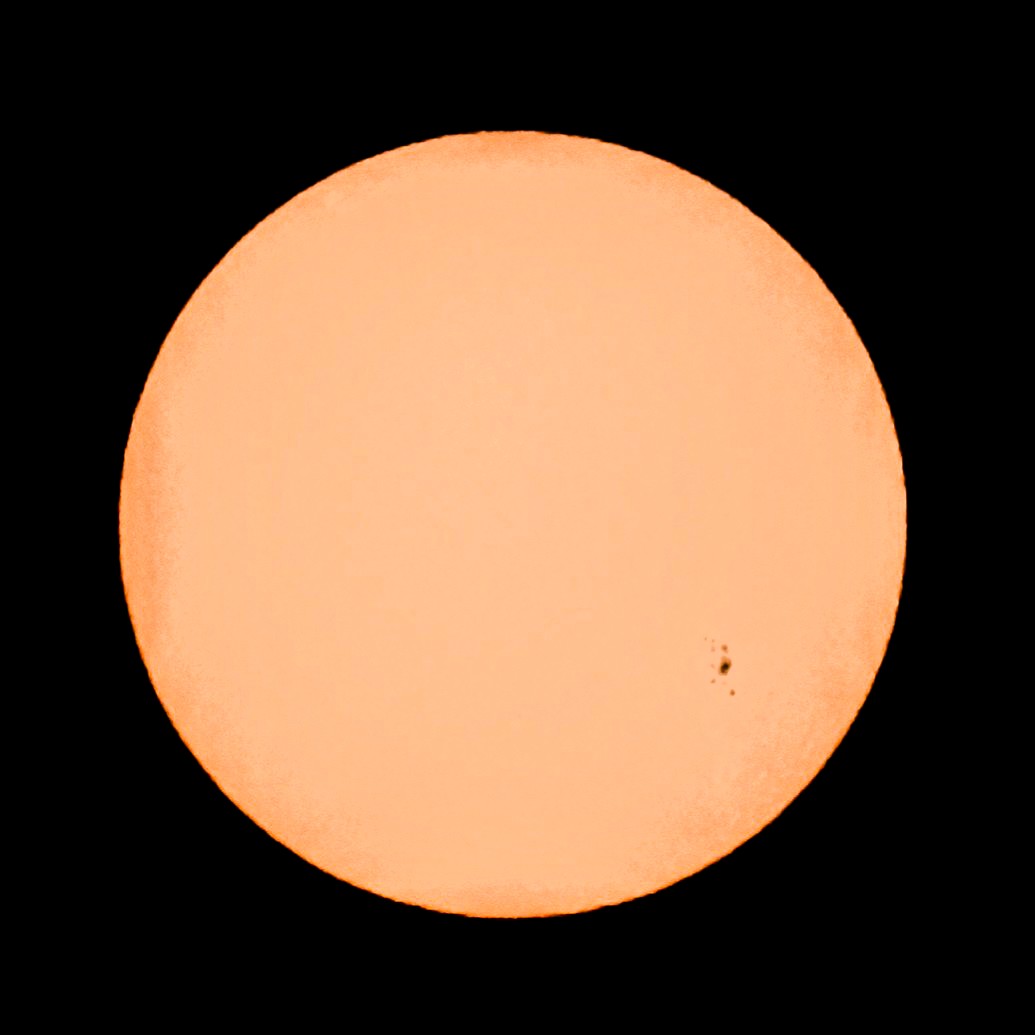
[Nikon D750 1/500 sec. with Borg 90FL at f/5 prime focus, solar filter]
-
New Year’s Aurora
Not having my fill yet of aurorae, I made a quick trip up to Fairbanks, Alaska after having gotten word of a M2-class solar flare.
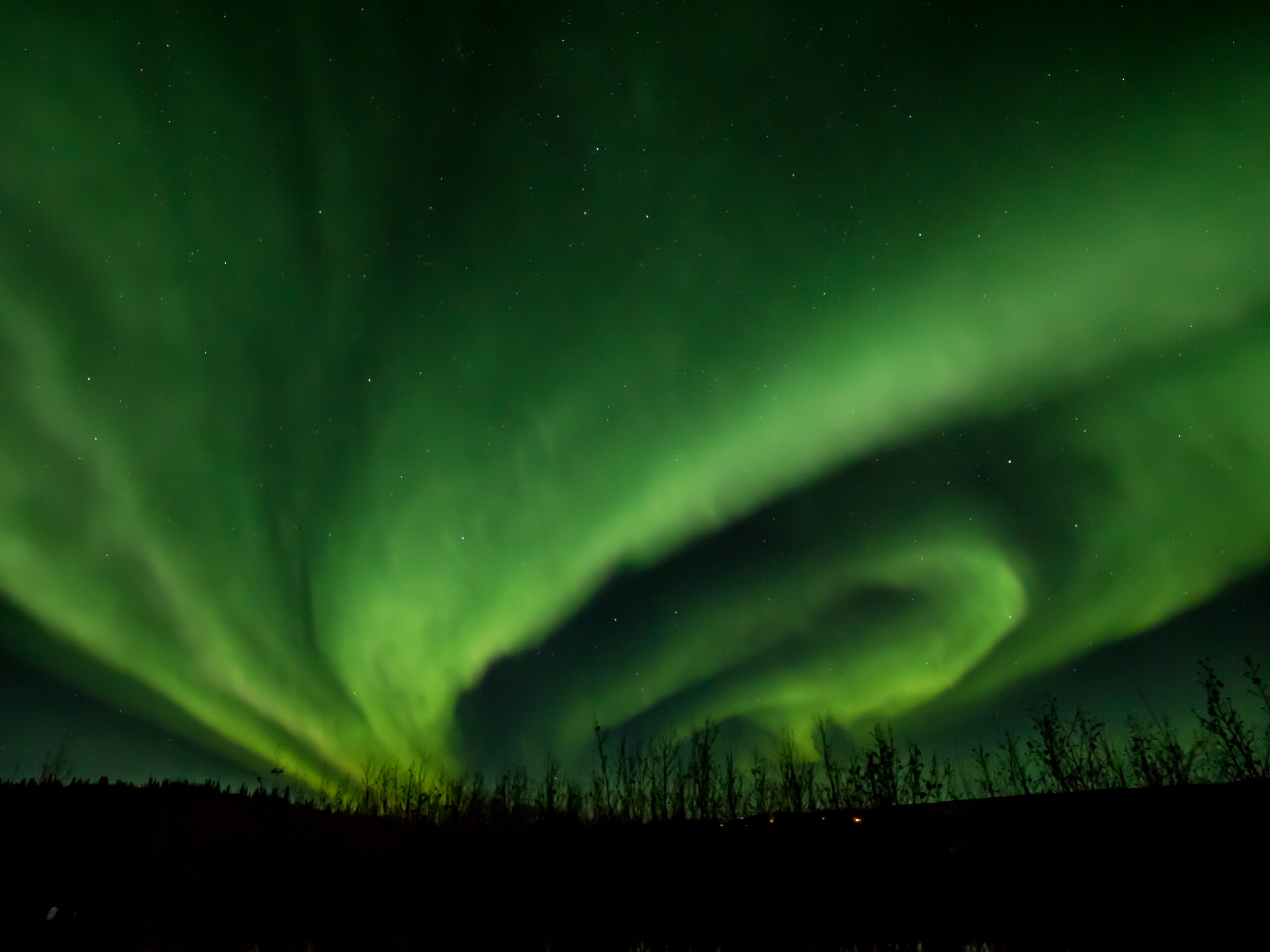
Just about at midnight on New Year’s Eve this happened!
-
Trifid Nebula M20
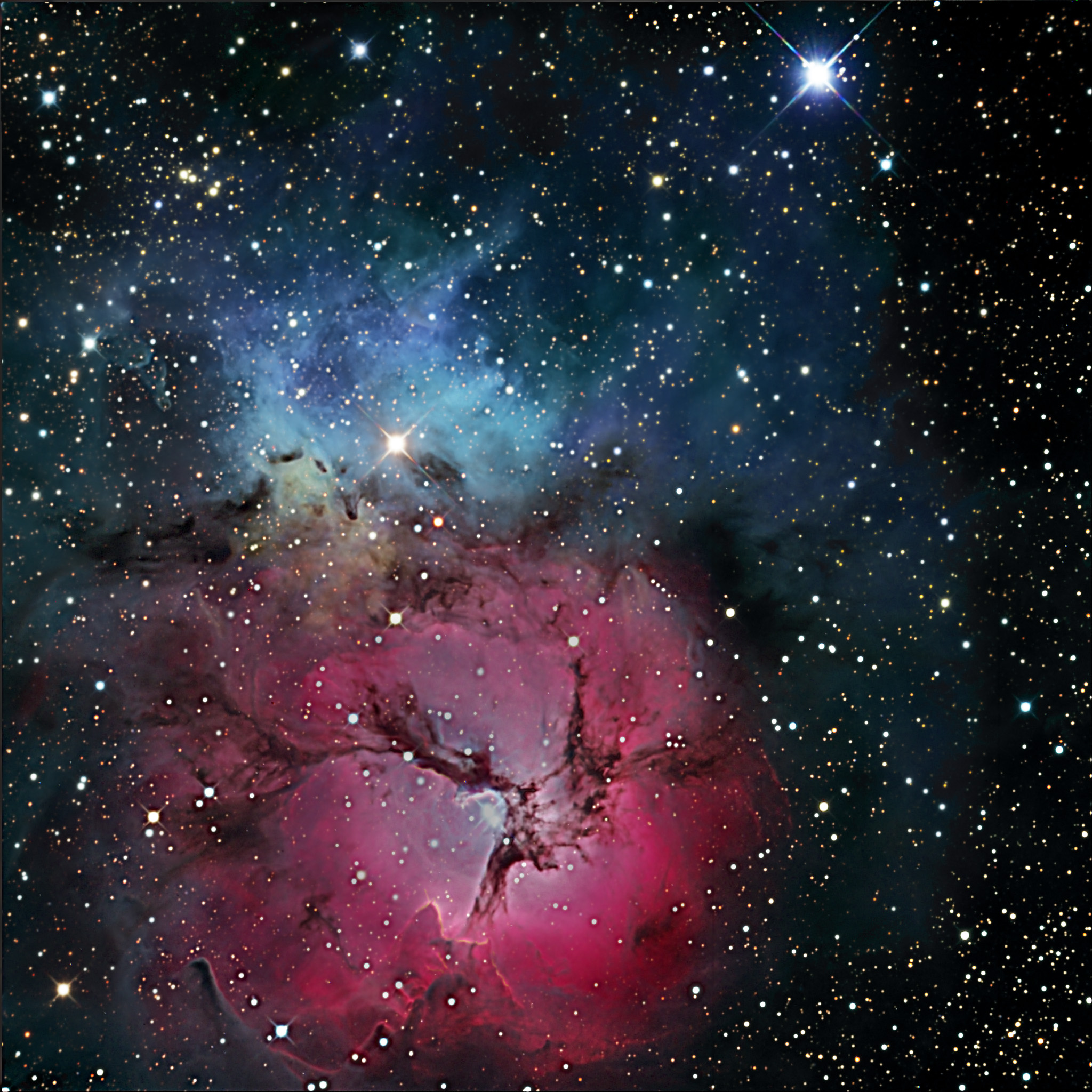
The Trifid Nebula (M20, also known as NGC 6514) I’m very pleased with this one!! This project was nearly 2 months in the making, but it was worth it.
In my opinion, the Trifid is one of the very prettiest objects in the sky, at least in the Northern Hemisphere. It’s full of rich colors and fine details in the dust lanes and gaseous structures.
I was blown away by the result I got; the image was stunning! I was especially pleased with the details in the dark dust lanes, the range of colors in the emission and reflection parts of the nebula, and the overall 3D appearance of the puffy clouds. Then, another surprise. While examining the image in detail I noticed a tiny but clear straight line jutting out from one of the clouds near the bottom. Was that an artifact, or could it be… ? I checked the Hubble archive and found what I was looking for – a high resolution close-up of the region in question and sure enough, it was an actual stellar jet! This was the first time I had captured anything like this and it was the icing on the cake:
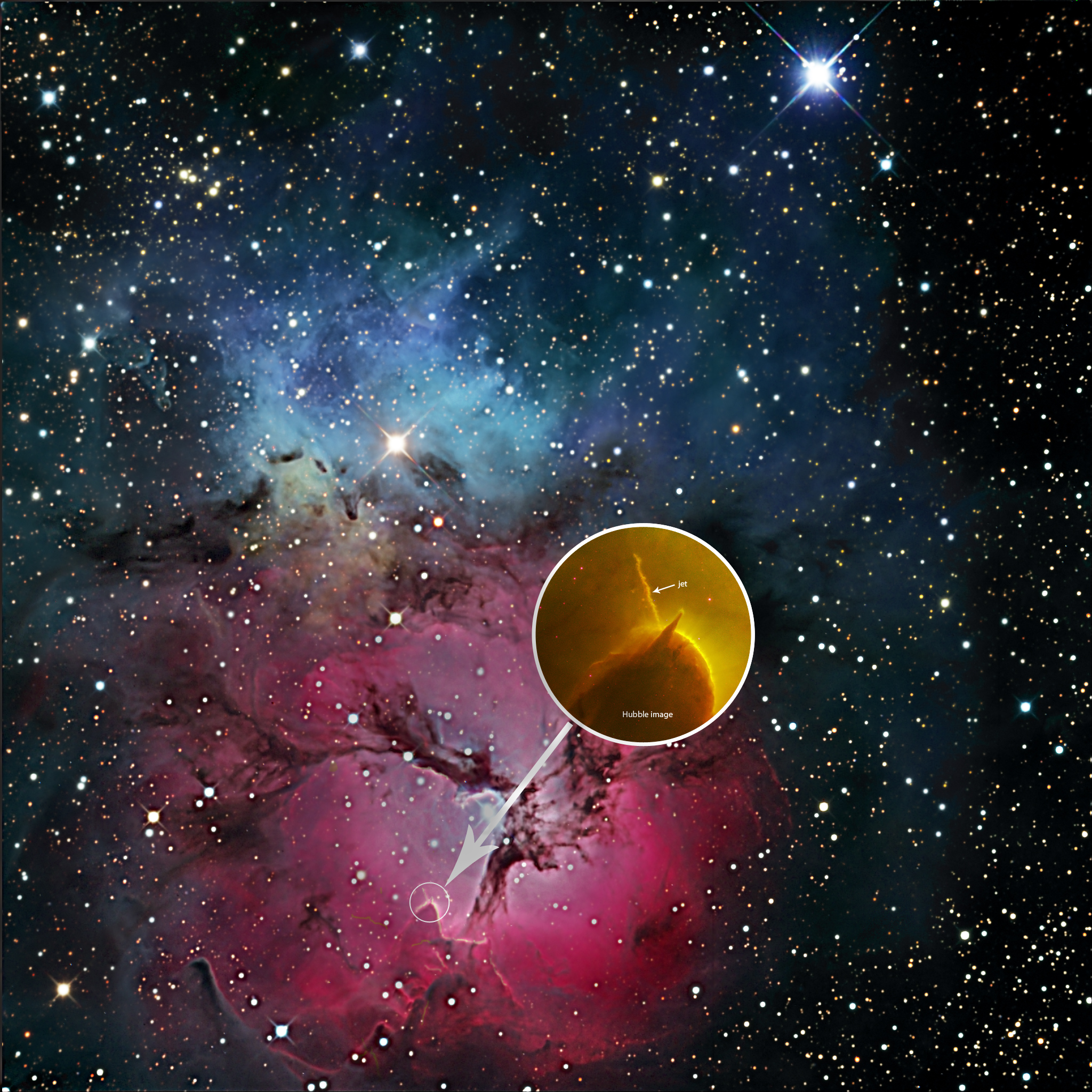
Jet in M20 The jet itself is quite interesting:
“A stellar jet [the thin, wispy object pointing to the upper left] protrudes from the head of a dense cloud and extends three-quarters of a light-year into the nebula. The jet’s source is a very young stellar object that lies buried within the cloud. Jets such as this are the exhaust gases of star formation. Radiation from the massive star at the center of the nebula is making the gas in the jet glow, just as it causes the rest of the nebula to glow.
The jet in the Trifid is a “ticker tape,” telling the history of one particular young stellar object that is continuing to grow as its gravity draws in gas from its surroundings. But this particular ticker tape will not run for much longer. Within the next 10,000 years the glare from the central, massive star will continue to erode the nebula, overrunning the forming star, and bringing its growth to an abrupt and possibly premature end.”
– Hartmut Frommert & Christine Kronberg (SEDS)
The shorter spike pointed about 45° clockwise from the jet is a knot of denser material resisting the stellar wind “blowing” the less dense material around it.
This is certainly my best astronomical image so far.
[32″ RC f/7 with SBIG STX KAF-16803 16 megapixel camera @ Mount Lemmon SkyCenter, Arizona]
-
Comet 2014/UQ4
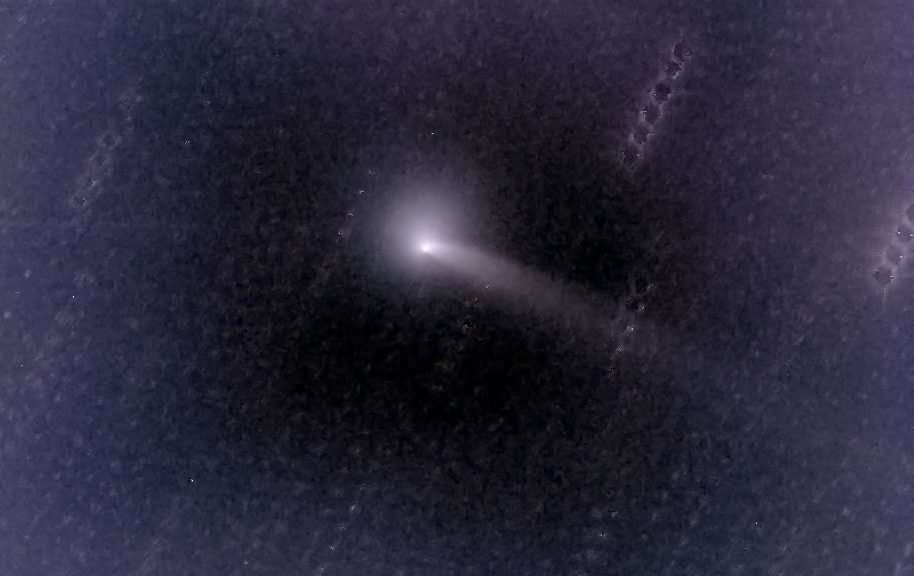
Comet 2014/UQ4 A comet I’ve been tracking called “2014/UQ4”
This a composite of 5 stacked images. The comet is moving rapidly across the background star field, so they are smeared out while the comet itself is sharp. The tail is quite long at this point, about 30 arcminutes (half a degree).
The image below is an animation made from 31 frames show the comet moving against the background stars. Click on the image to see it animated. The frames are about 10 minutes apart in real time, with some longer gaps. As you can see it’s moving quite fast!
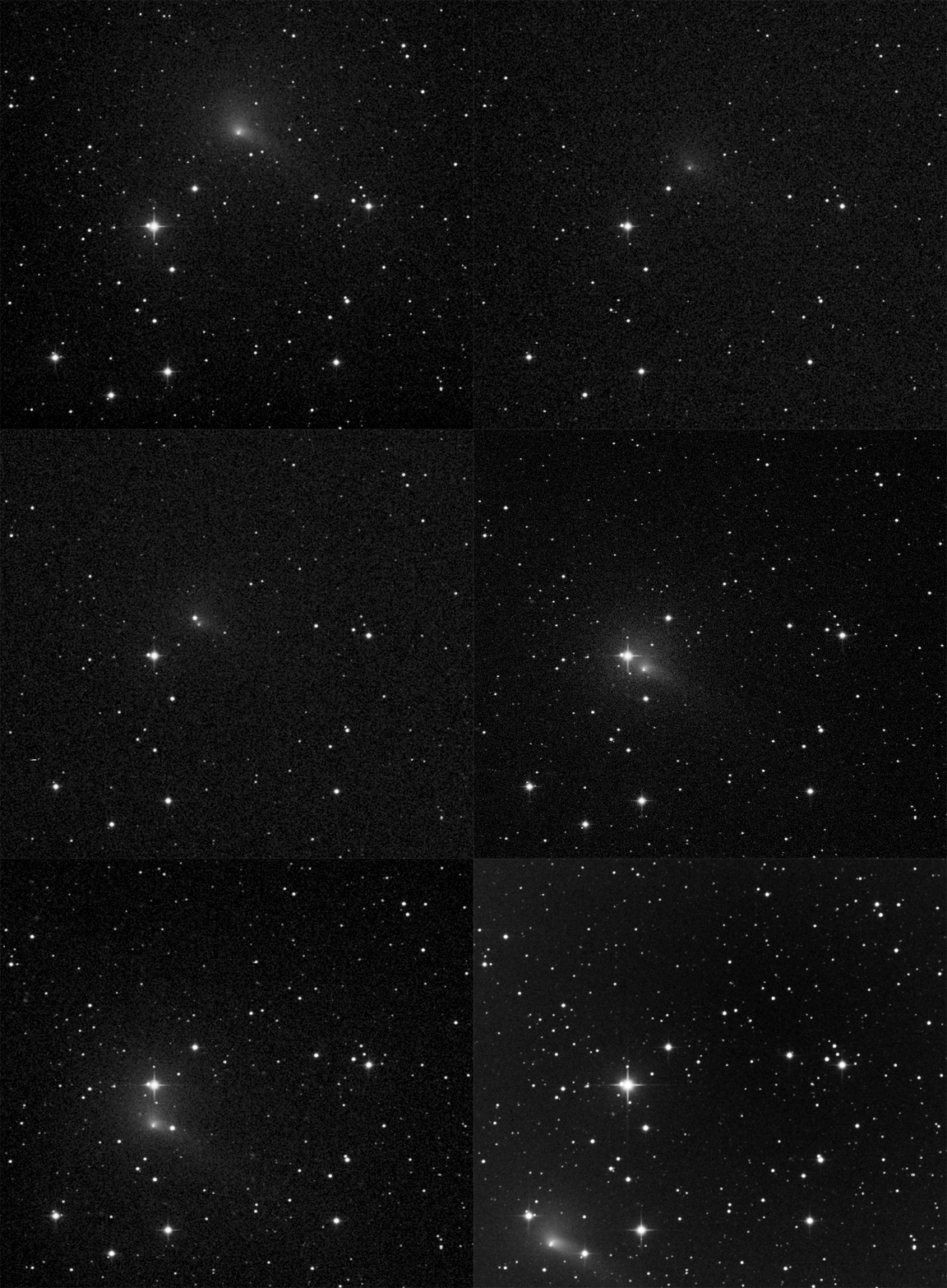
Animation of comet 2014/UQ4 Notice how the comet is moving *perpendicular* to the tail. That’s because contrary to popular impression, a comet tail is not due to the motion of the comet but always points directly away from the Sun.
[20″ CDK f/6.8 with FLI PL09000 camera @ Mt. Teide Observatory, Canary Islands, Spain]
-
Eagle Nebula (M16)
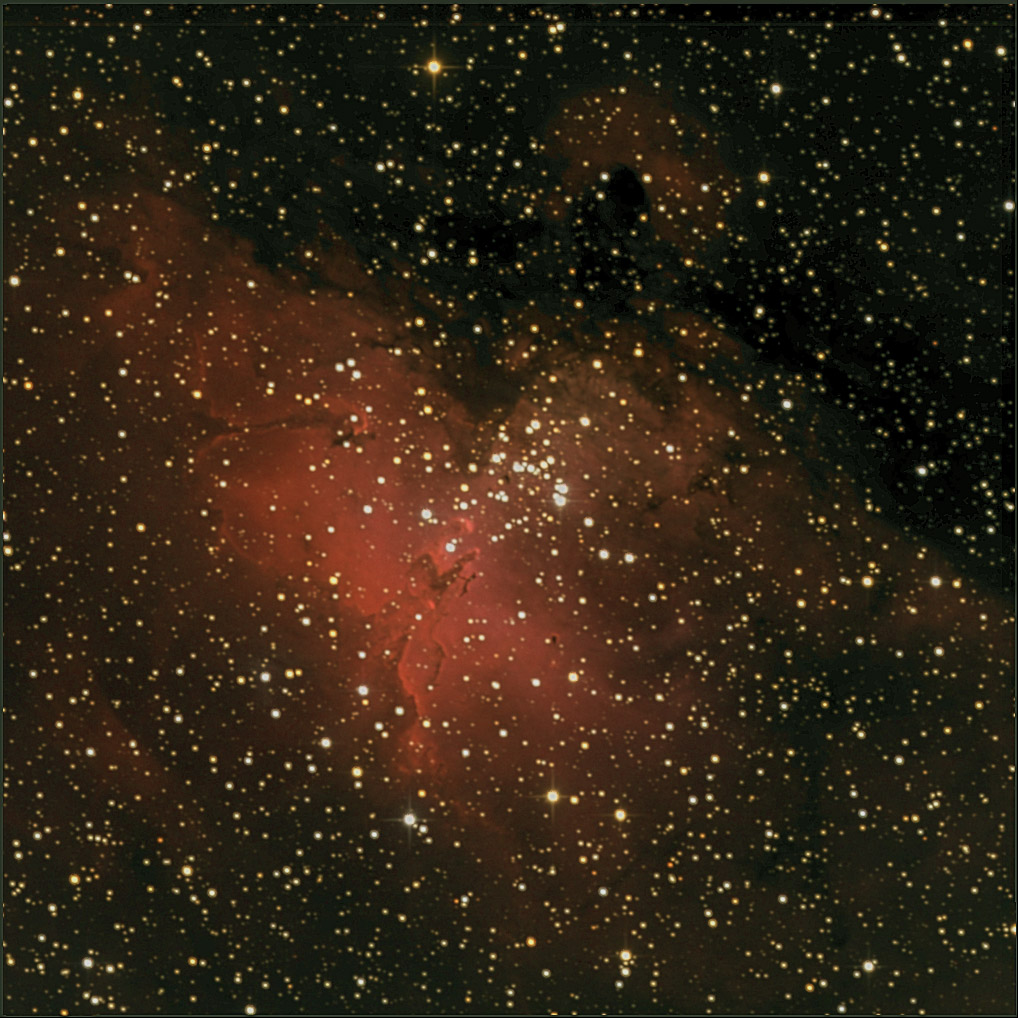
Eagle nebula – M16 The Eagle Nebula M16. It’s called that because somebody thought the dark shapes in the center looked like an eagle taking flight. Does it look like that to you?
The central part might seem familiar to some of you; it was made famous in a Hubble image dubbed “Pillars of Creation”:
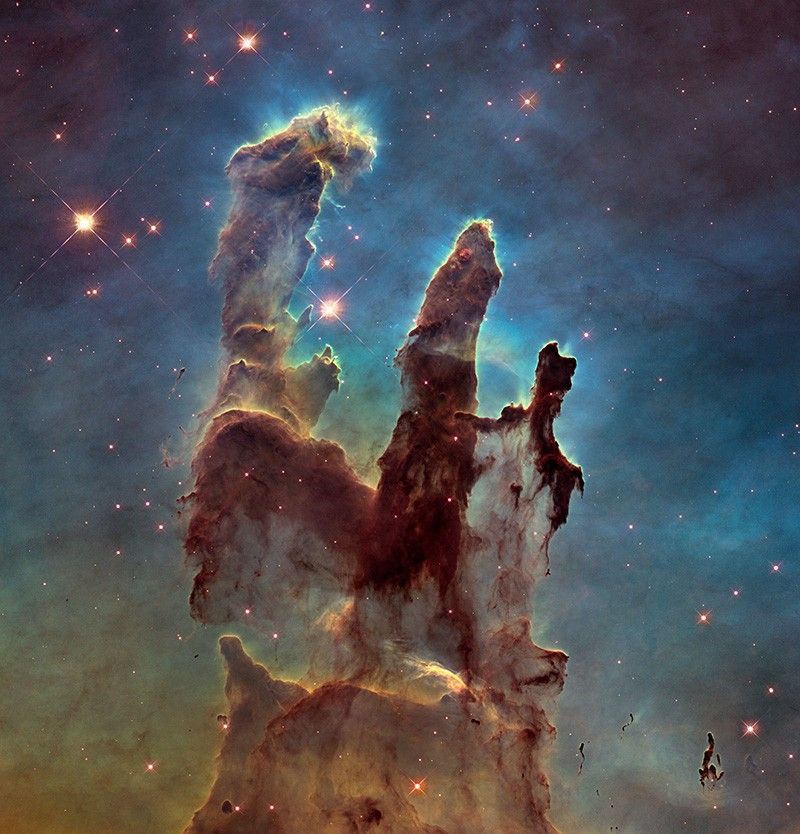
Hubble image That’s a closeup of the central region (rotated 45 deg counterclockwise).
[20″ CDK f/6.8 with FLI PL09000 camera @ Mt. Teide Observatory, Canary Islands, Spain]
-
Neptune
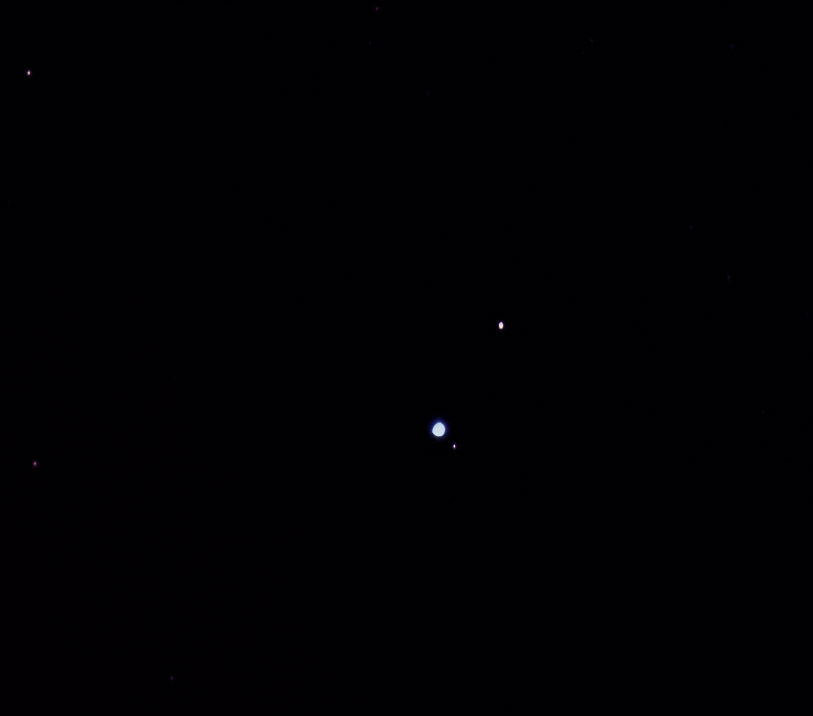
First shot of Neptune. The pale blue color is clearly visible, as well as one or perhaps two of its moons.
[14″ SCT f/11 with ST-10XME 3 megapixel camera @ Mt. Teide Observatory, Canary Islands, Spain]

